


Blog
What is circular fashion and what you need to know about it

What is the Circular Economy?
The current fashion economy works on the prioritization of mass consumption and production. The environmental impact caused by often fossil fuel-based synthetics that aren’t made to be reused or recycled can be devastating, hence why the fashion industry is shifting in favour of the circular economy.
Unlike the linear fashion model that enables the fast fashion industry to maximise environmental damage, the circular economy is an economic model inspired by the principles of the indigenous people and designed to keep waste to a minimum while maximizing the use of resources.
No more synthetic fabrics that can only be used once and get thrown into the landfill, the goal of the circular economy is to keep extracting the value of resources for as long as possible.
What are the three pillars of Circular Fashion?
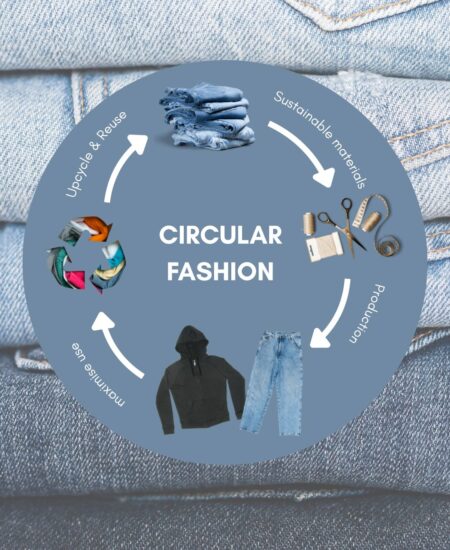
Circular fashion is the approach the fashion industry takes to follow in line the circular economy. Its goal is to create a closed-loop system that will help increase an item of clothing’s lifespan and reduce fashion wastage, providing an eco-friendly form of fashion production and consumption. This system usually follows three major principles:
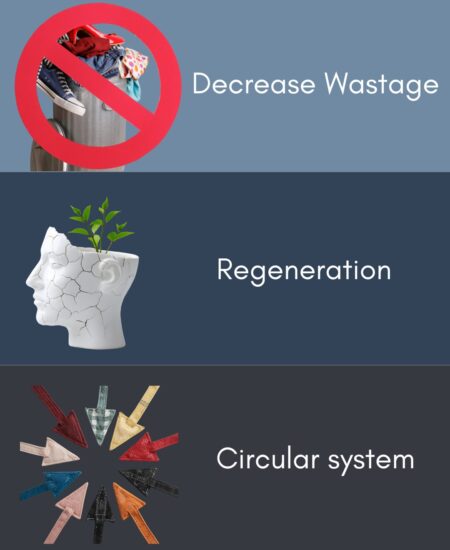
Decrease wastage: Out with the take-make-waste model of fast fashion and in with a new system that prioritises reducing fashion waste. Clothing designed in the circular fashion economy are created to be recyclable, repairable and reusable, not only get maximum value from each clothing item, but also increase its lifespan.
Regeneration: Circular fashion is not just about reducing waste, but steps further into providing a positive environmental impact by restoring nature. By moving to using practices that allow nature to rebuild itself, circular fashion focuses on ensuring the environment is facing less damage and more restoration in its practices and process.
Circular system: Keeping things in the loop is an essential principle of circular fashion. Clothing is made to be maintained and reused as products or when they are at the end of their lifecycle, broken down into raw materials that can be recycled or remanufactured.
Why does circular fashion matter?
The traditional ‘take-make-waste’ model of the fashion industry is becoming outdated as there are growing concerns about its harsh environmental and social impact. Now, more fashion brands and its consumers are moving towards more ethical ways of producing and consuming fashion.
The circular fashion approach provides the fashion industry and its consumers a way to maintain style and quality, while minimising fashion waste. Circular fashion allows clothes to be reused, recycled, repaired, not only maintaining the quality but the longevity of the clothing.
Overall, it provides a much needed positive impact on the planet and the people who make, sell and buy clothing.
